“You know you wouldn’t be half bad if you got better,” my mother said of my singing when she was ninety-five. Though I’d heard it subliminally throughout my life, dementia had stripped her filters, making her frankness almost endearing.
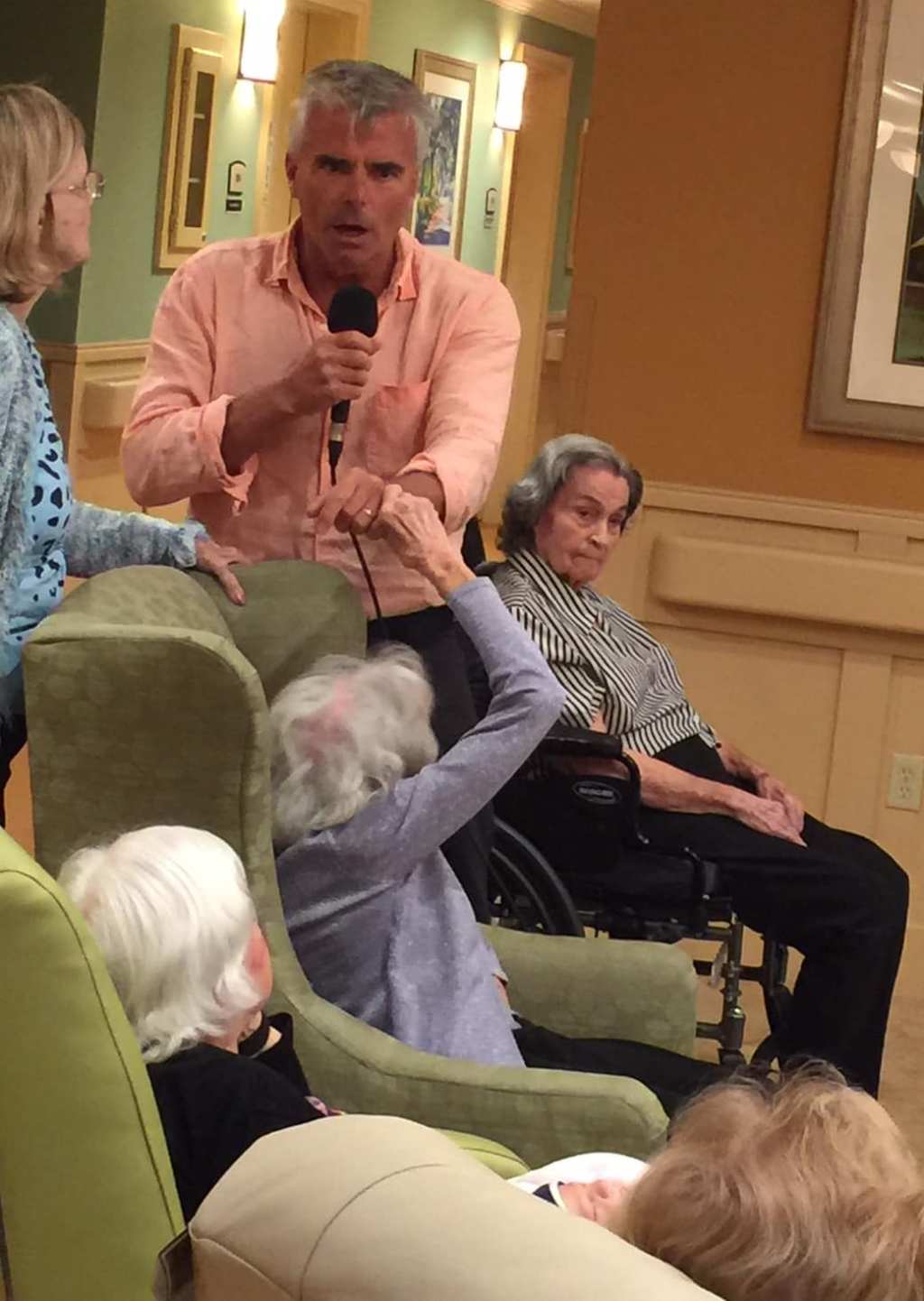
A decade earlier, I’d discovered music could redirect her endless questions about going home. Standards drew her in, and with a karaoke speaker and her approved playlist, we became regulars at Silver Glen, Heavenward Haven, and the other facilities she called home in her final years.
“How sweet,” staff would say as I wheeled her through hallways. “You wouldn’t believe how many families don’t even visit for Christmas.”
“I can’t help it,” I’d whisper between verses of “My Way.”
I sang several times weekly in Connecticut and Florida, developing my signature move: crooning on my knees, locking eyes with residents until, if they were able, we’d dance like film stars. Their hunger for connection freed my voice, my body. But even then, my mother’s askance looks reminded me I wasn’t attending to her enough.
When dementia clouded her recognition of me, I tried taking her hand. The resistance in her milky eyes revealed a truth: beneath her lifelong pretense, she’d never approved of me. Still, I lay beside her before she passed, arm wrapped around her unresponding form. Later, I scattered a teaspoon of her ashes above a newly planted Camelia that died the following spring.
When Covid sealed nursing homes, I found another way to act like a good son. Through an emergency exit, I pushed my speaker near the dining room windows. “I’ll Be Seeing You” drew residents from their wheelchairs to the glass. Our hands met across the barrier, like creatures reaching between worlds. Before grief could overwhelm us, I launched into “My Favorite Things,” my mother’s favorite. Together we laughed and sobbed, aware of what no one could touch, until Bingo time arrived.
 Jed Wolf
Leave a comment